


How to choose a carrier for a dog or cat — a guide
A well-chosen carrier is half of a safe journey: it protects your pet in the car, determines whether an airline will accept it on board, and reduces stress on the road. A carrier that is too small restricts movement; one that is too large gives no sense of security and is dangerous during braking. Here is how to choose a carrier by size, material and type of trip.
Why the right carrier matters
A dog or cat moving freely around the cabin is a risk for everyone: during sudden braking the animal becomes a projectile, and a frightened one can distract the driver. A carrier gives the pet its own predictable space and meets formal requirements — airlines, carriers and border services treat it as the animal's mandatory "seat". On long routes, for example during pet transport by car between Poland and the rest of Europe, the animal spends most of the day in the carrier, so comfort directly affects its well-being.
Size: how to measure your pet
The universal rule: the animal must be able to stand up, turn around its own axis and lie down comfortably with legs extended. Measure body length from the tip of the nose to the base of the tail (A), height from the floor to the top of the head or ear tips (B) and chest width. Minimum carrier dimensions: length = A + half the length of the front leg, height = B + 5–10 cm of headroom. When buying for air travel, apply the same rule — it is an IATA requirement, not a suggestion: an undersized crate is grounds for refusal at the airport.
Types of carriers and their uses
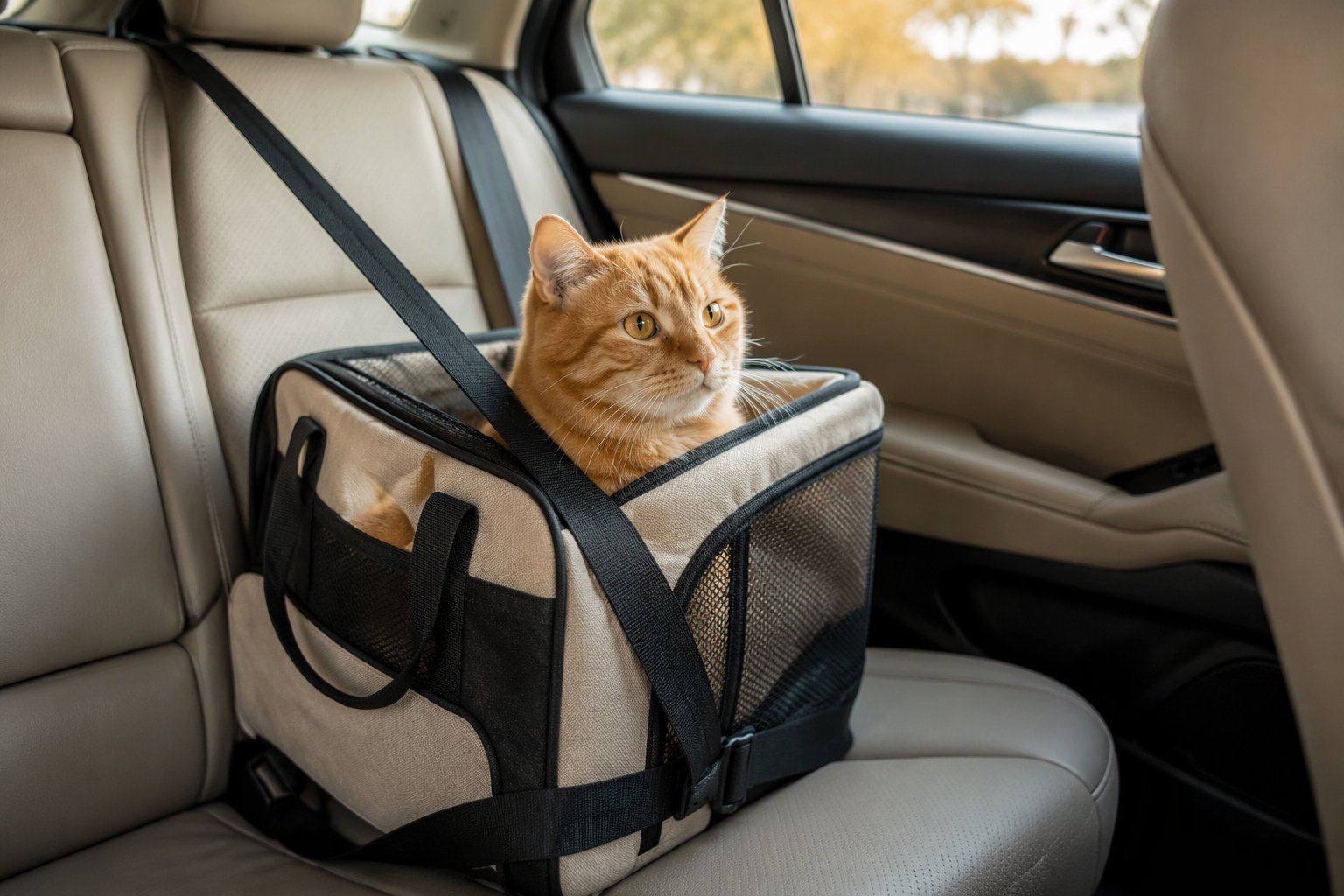
Plastic crate (IATA type) — rigid shell, metal door, ventilation on four sides; universal for cars and mandatory for the aircraft cargo hold. Soft bag — lightweight, with mesh windows; good for cats and small dogs in the car and in the aircraft cabin if it fits under the seat. Wire crate — maximum ventilation but poor protection from wind and prying eyes; better for short trips. Carrier backpack — only for short walks, not for car transport.
Carrier for air travel: IATA requirements
The cargo hold requires a rigid crate: assembled with bolts (not clips only), with a metal door, ventilation on four sides, a water bowl fixed inside and absorbent bedding. The animal must not touch the ceiling with its head while standing. Airlines usually allow pets up to 8 kg including the bag in the cabin if it fits under the seat (typically around 55×40×20 cm, but each airline has its own limits). Read more in our article about flying with a cat, and if the animal travels unaccompanied, see our cargo transport service.
Safety in the car
Place the carrier on the back seat or in the boot of an estate car, across the direction of travel, and secure it with seatbelts or ISOFIX straps — never on the front seat where the airbag deploys. Do not let the animal out of the carrier while driving, not even "for a minute". Put an absorbent pad or blanket on the bottom; in summer ensure ventilation and shade, in winter keep the cabin at 18–22 °C. Stop every 2–3 hours: water, a short leashed walk for the dog, and a check on the animal's condition.
How to acclimatize your pet to the carrier
Start 2–3 weeks before the trip: leave the carrier open at home, put a favourite blanket inside and feed the animal closer and closer to the entrance, then inside. Close the door for a few minutes at first and reward calm behaviour. Short trial drives (10–15 minutes) teach the pet that the carrier means nothing bad. Do not give sedatives without consulting a vet — some are banned for air transport because they disturb thermoregulation.
How Animal Trips helps
We select a carrier for the animal's weight, dimensions and temperament, and for the type of route; for air transport we make sure the crate complies with the specific airline's requirements. Our vans have mounts for crates of every size, climate control and monitoring. See the full list of our services and transport by plane — we prepare a quote within 60 minutes.